Posts
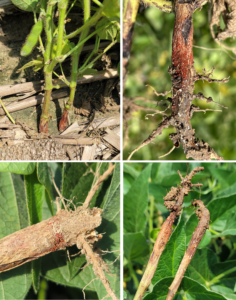
Red crown rot symptoms are continuing to progress across Indiana, and additional affected fields are being identified as the season advances. Most new reports have
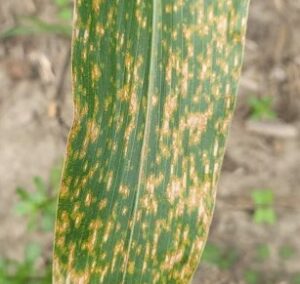
Foliar diseases are becoming increasingly evident in corn fields across Indiana, with gray leaf spot emerging as the most prevalent disease thus far this season.
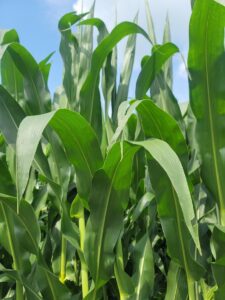
Continued scouting of both corn and soybean fields remains critical for making timely and informed disease management decisions. Crop development varies considerably across Indiana, with
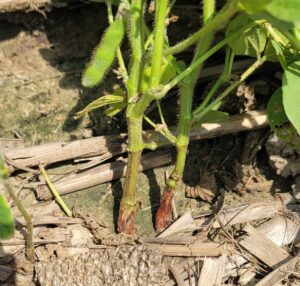
Red crown rot of soybean, caused by Calonectria Ilicicola, continues to be a concern in Indiana. We have identified our first symptoms in 2026 in
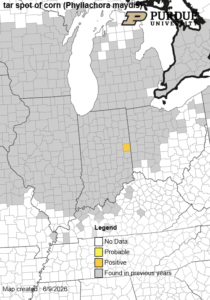
Questions about tar spot management were already beginning to surface as corn planting nears completion across Indiana. With today’s confirmation of the first positive tar
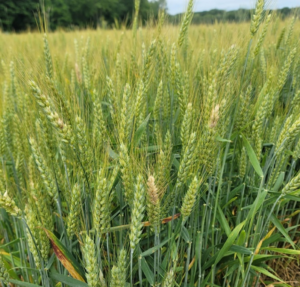
Darcy Telenko Wheat development continues across Indiana. In central Indiana, wheat is currently flowering (Feekes 10.5), while wheat in our southern Indiana research plots has
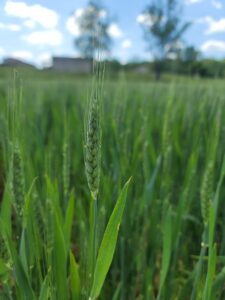
It is time to keep an eye on wheat for diseases and scab risk. There are a number of foliar diseases in wheat to watch
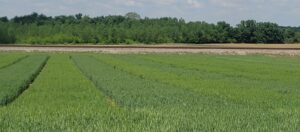
I would like to remind everyone on the resources available for monitoring field crop diseases here in Indiana as planting progresses. The Purdue Field Crop
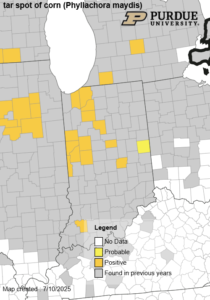
Tar spot map July 10, 2025.
It is important to continue to scout for diseases in both corn and soybeans to make informed management decisions.
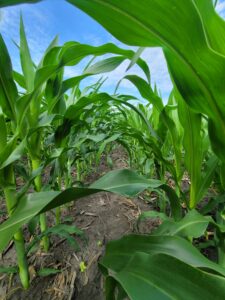
Most corn fields I have been in this week are pretty clean. A few diseases that I have seen include anthracnose, tar spot, and common