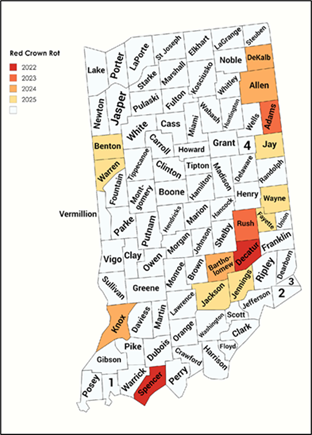
Red crown rot symptoms are continuing to progress across Indiana, and additional affected fields are being identified as the season advances. Most new reports have been from fields with a previous history of the disease, although we are actively monitoring for its spread into new areas. Figure 1 is a reminder of where red crown rot has already been confirmed in previous years. As we move through the next several weeks, we want to determine the current distribution and severity of red crown rot across the state. We need your help by scouting fields, documenting suspected cases, and submitting samples so we can better understand the spread of this emerging disease in Indiana.
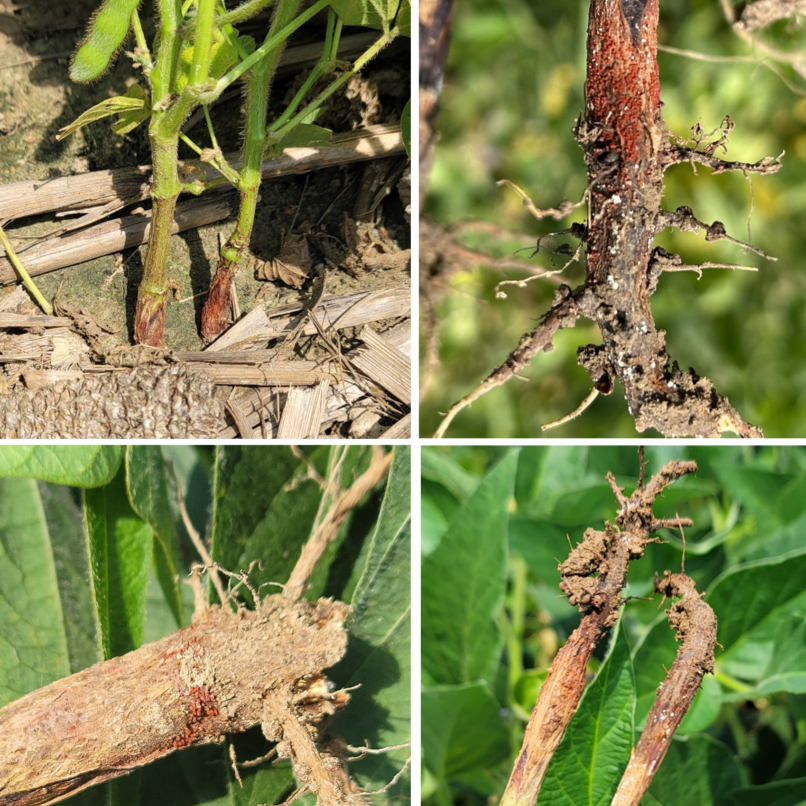
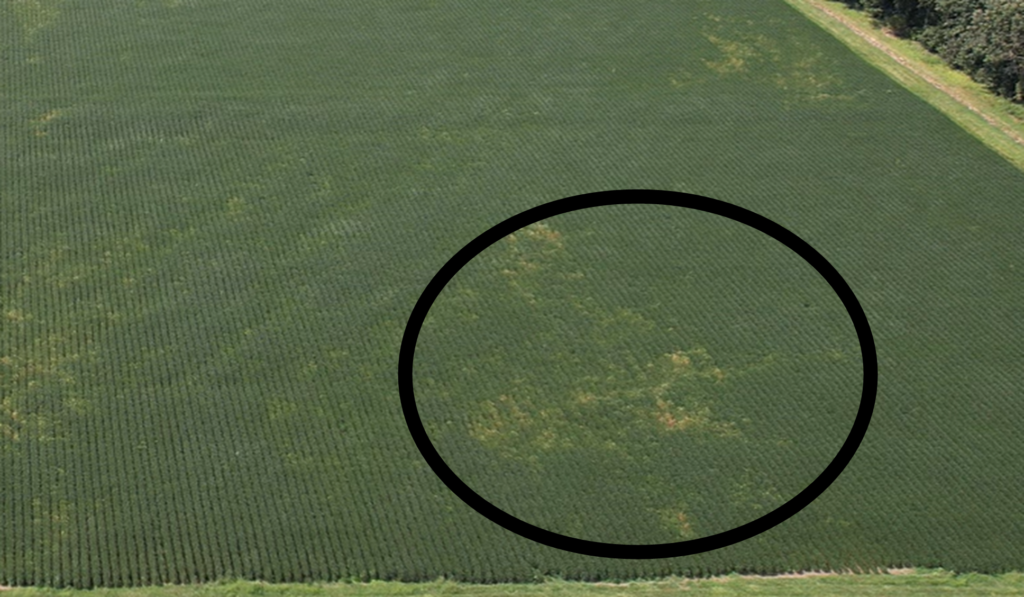
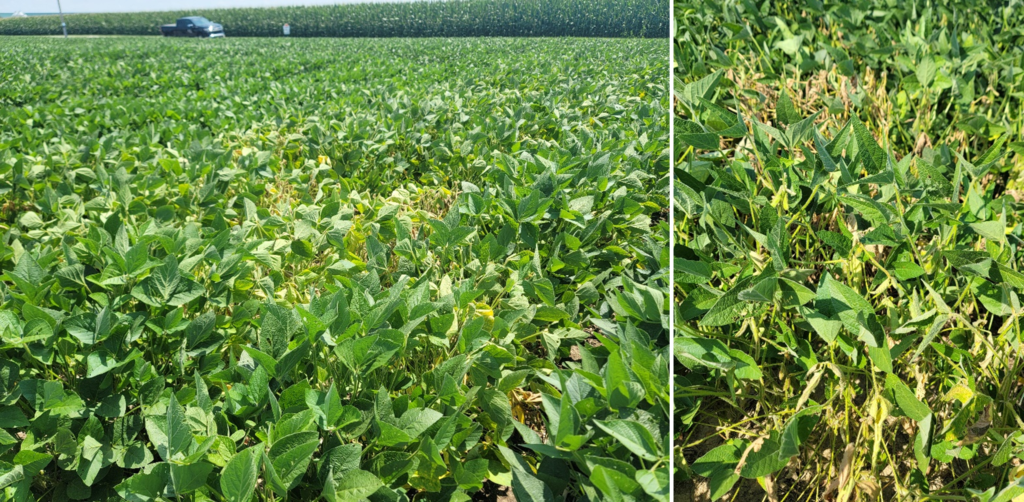
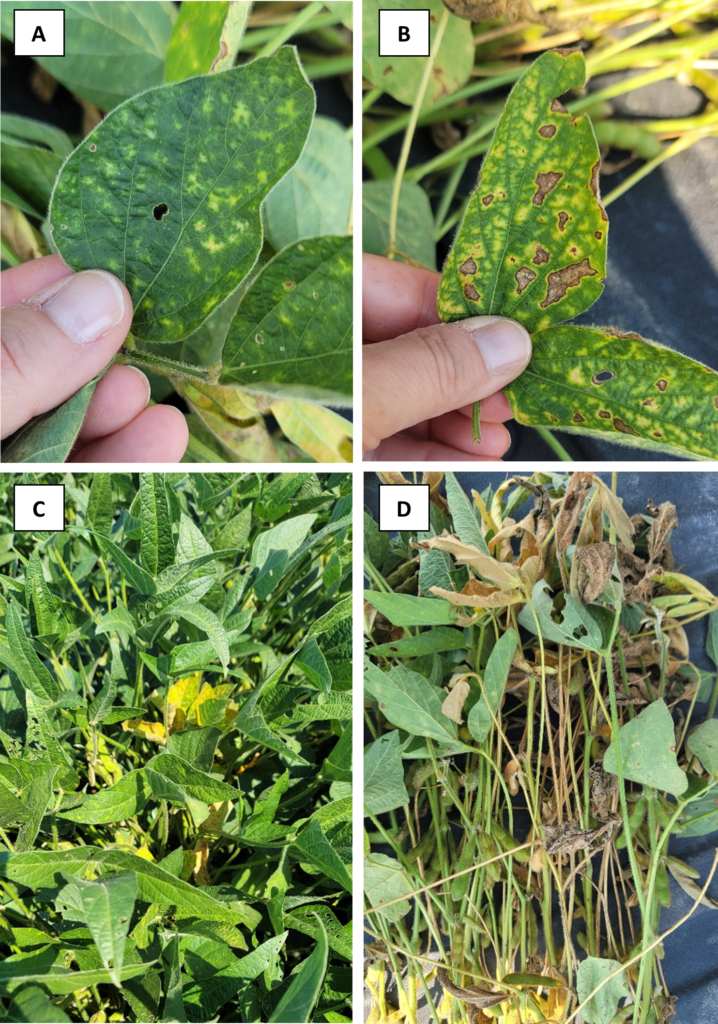
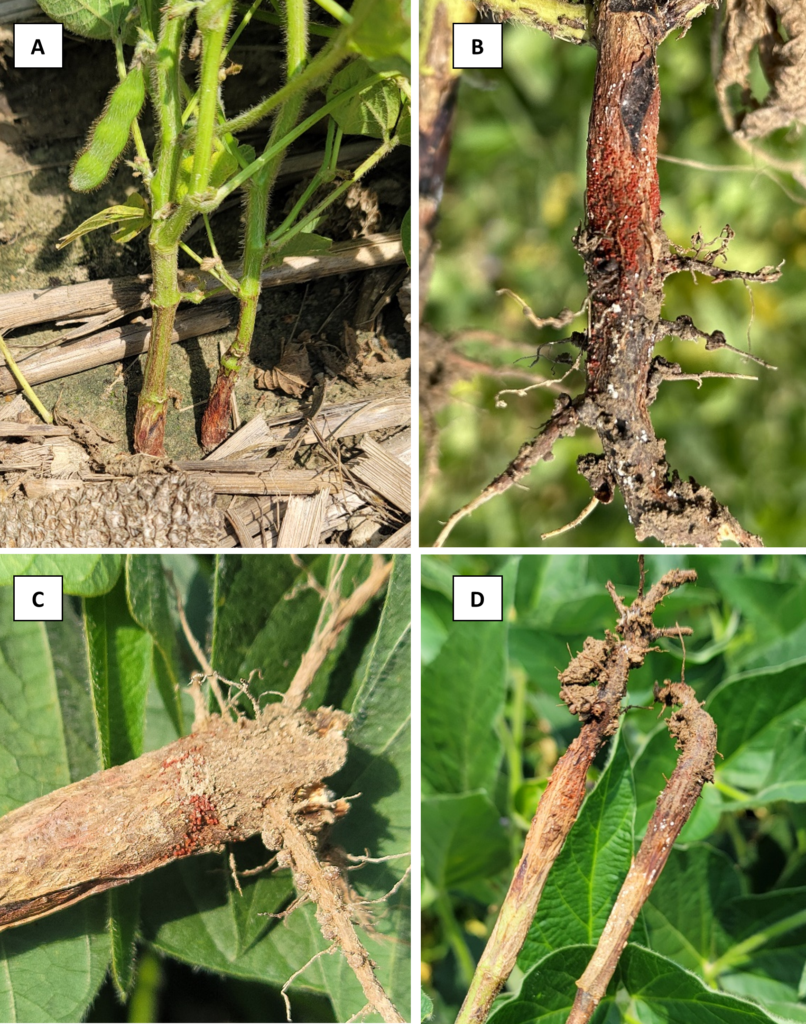
What to look for: Red crown rot often develops in small patches within a field, similar to other soilborne diseases such as sudden death syndrome (SDS) and brown stem rot (Figure 2). Early foliar symptoms can closely resemble these diseases and include interveinal chlorosis (yellowing) and necrosis (browning) of leaf tissue (Figure 3). Because these foliar symptoms are not unique to red crown rot, it is important to collect several symptomatic plants and examine the lower stem and root system to confirm the diagnosis. Plants affected by red crown rot typically develop a distinct red discoloration on the lower stem near the soil line, and small, red, spherical fungal structures (perithecia) may be visible on the stem surface (Figure 4). When the stem is split open, the central pith may appear gray to brown, the roots are often rotted, and affected plants are easily pulled from the soil due to root deterioration.
We continue to work with colleagues across the mid-west to track this disease. Samples of soybean infected with red crown rot will greatly assist us in determining the distribution of red crown rot and guide future research. We greatly appreciate the samples that we have received and want to encourage you to get out and look at these suspect areas in your fields.
If you have (or think you have) red crown rot in your field, please collect several plants showing the symptoms and send them to the Purdue Plant Pest Diagnostic Laboratory (PPDL).
Please ship early in the week. If you are sending samples from multiple locations, please label them and provide the date collected, variety, field zip code or county, and previous crop.
Mail to: Plant and Pest Diagnostic Laboratory
LSPS-Room 116, Purdue University
915 W. State Street
West Lafayette, Indiana 47907-2054
Checkoff funding from both the Indiana Soybean Alliance and United Soybean Board are supporting sample processing, therefore there will be no charge for soybean samples submitted to the clinic.
Questions please contact Darcy Telenko (dtelenko@purdue.edu/764-496-5168) or PPDL (ppdl-samples@purdue.edu/765-494-7071)