Darcy Telenko
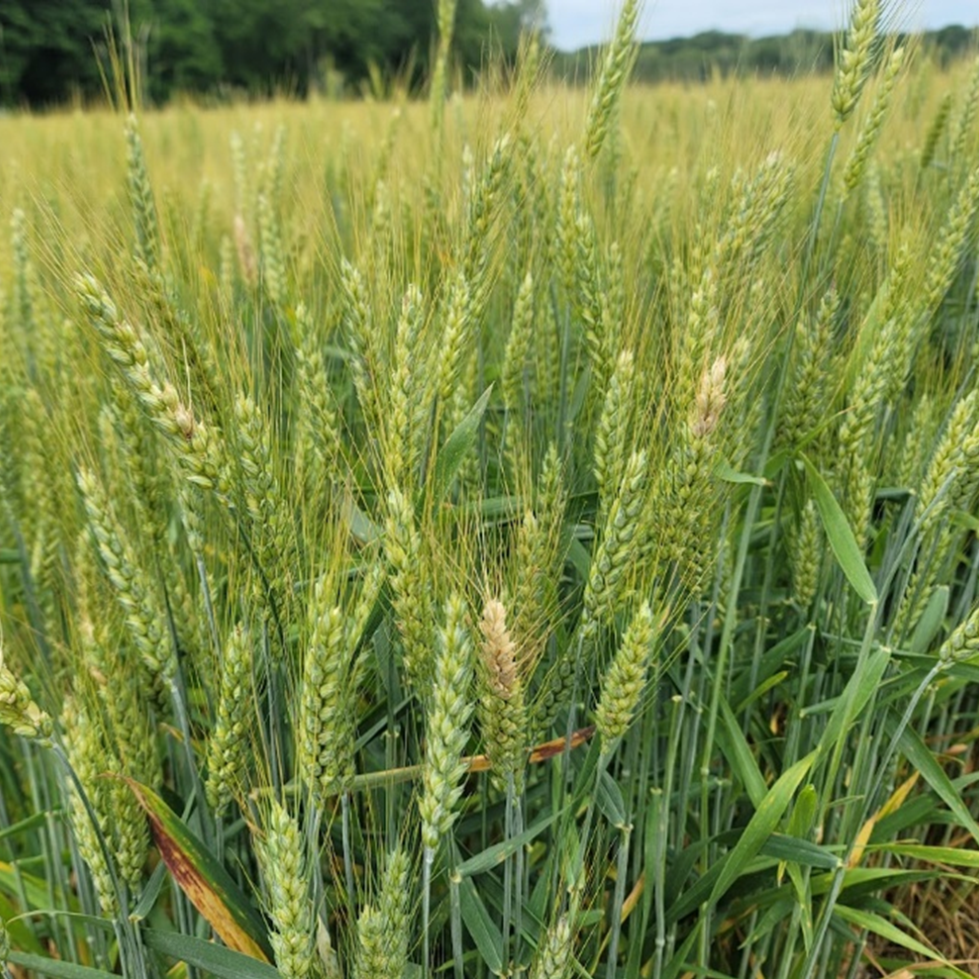
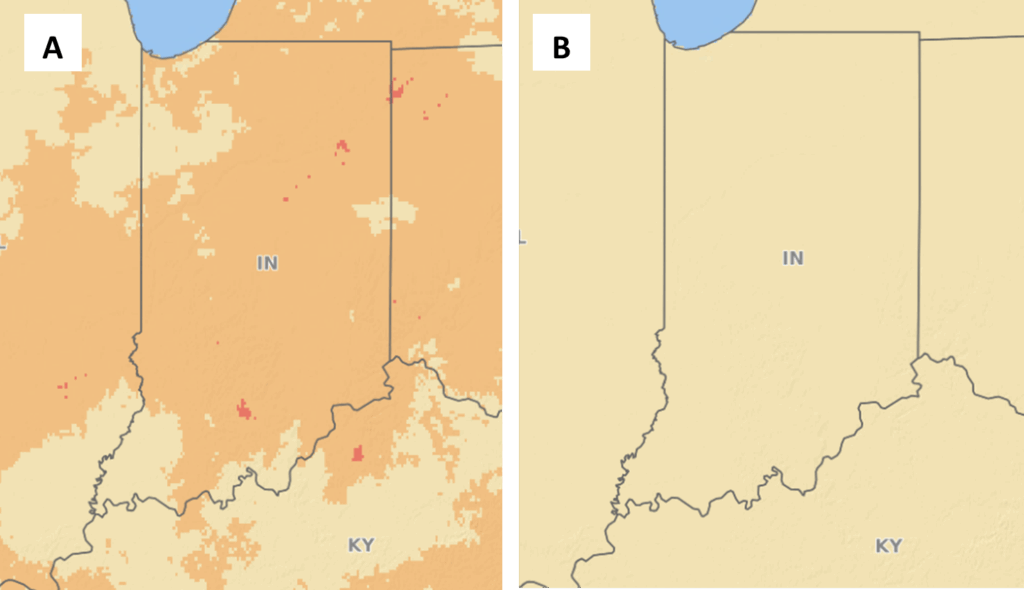
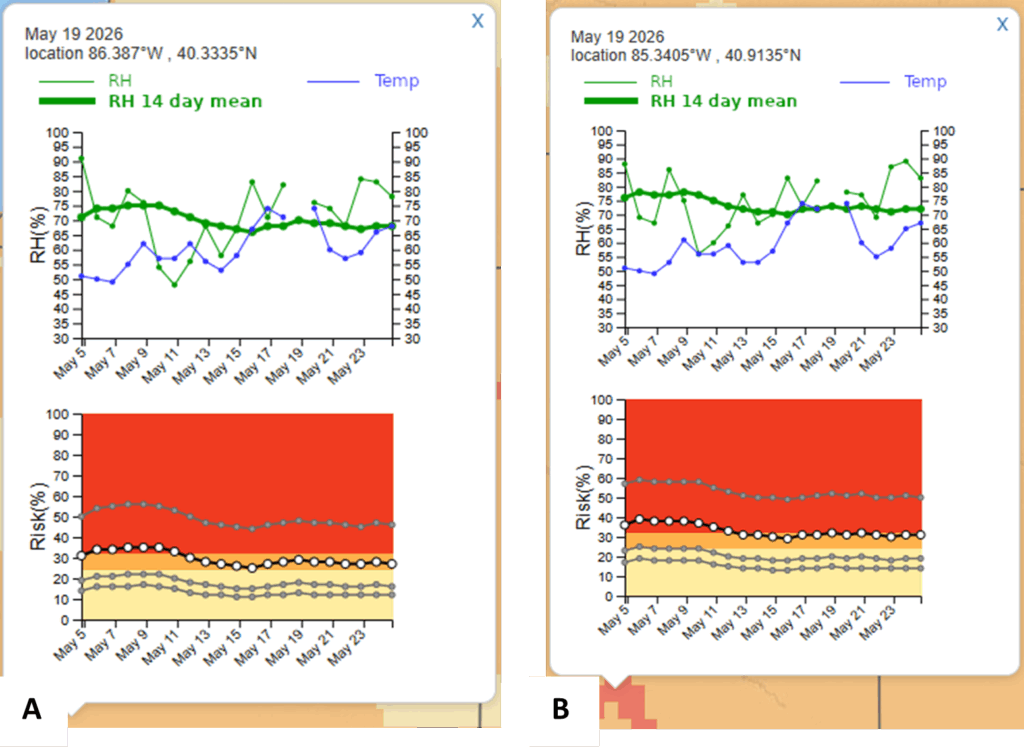
Wheat development continues across Indiana. In central Indiana, wheat is currently flowering (Feekes 10.5), while wheat in our southern Indiana research plots has advanced to the dough stage (Feekes 11.2). According to the wheat scab risk tool (Figure 1, https://www.wheatscab.psu.edu/ ), most of Indiana is presently at moderate risk for Fusarium head blight (FHB) for susceptible cultivars (Figure 1A), indicated in orange on the risk map, or at low risk, shown in yellow, for moderately susceptible cultivars (Figure 1B). A few isolated areas are currently classified as high risk (red). By zooming into specific regions of the map, users can also view recent trends in humidity and disease risk, as illustrated in Figure 2.
If you planted a susceptible wheat cultivar that is currently flowering and have not yet applied an FHB fungicide, it is still worthwhile to spray. Fungicide applications made up to 4–6 days after flowering can still provide effective control. The ideal timing for fungicide application is at flowering, when 50% of the main tillers show yellow anthers, or within 4–5 days afterward.
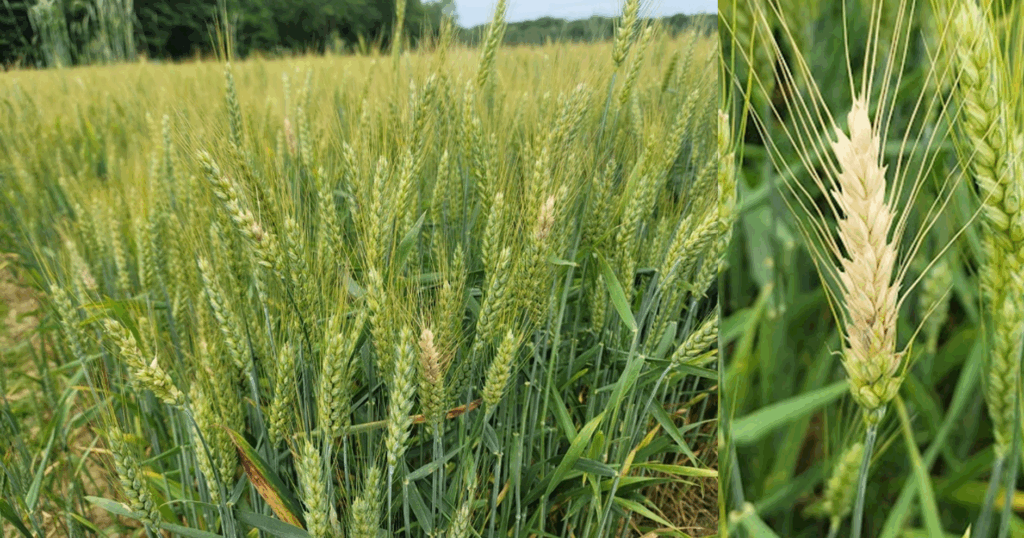
For fields that are past flowering and approaching ripening, now is the time to scout heads for Fusarium head blight (FHB), also known as scab, to help guide harvest decisions. FHB is one of the most significant and difficult wheat diseases to manage. Infection can lead to the production of the mycotoxin deoxynivalenol (DON or vomitoxin). Environmental conditions in our southwestern plots were considered low risk for FHB development, and wheat heads evaluated this week showed very low scab incidence. However, some areas may have experienced higher risk conditions, and scab symptoms could still appear.
FHB can reduce yield by producing shriveled kernels with a rough, sunken appearance and, in severe cases, causing complete head loss. Infected grain may also have lower seed quality and feeding value because of DON/vomitoxin contamination.
The next question is often, “I found scab in my field — what should I do now?” Below are several important management steps to consider.
- Document disease levels in each field to help guide future management decisions. FHB symptoms are easiest to identify while heads are still green, but become harder to assess as wheat matures. At later stages, you may still observe pink or salmon-colored fungal growth and purple-black fruiting bodies on infected heads. It is also important to record management practices used during the season, including fungicide application dates, crop growth stage at application, variability in crop maturity, and weather conditions following application. All of these factors influence disease control effectiveness.
- Harvest fields with the lowest disease levels first. Adjust combine settings to remove lightweight, shriveled kernels and chaff, and keep grain from healthy and infected fields separated. DON contamination is often highest in severely damaged kernels, so removing these can help reduce overall toxin levels.
- Test both grain and straw for DON before feeding to livestock. The presence of scabby kernels does not always mean DON levels are high, and grain with little visible damage may still contain elevated DON. Testing is essential to determine contamination levels accurately. Straw may also contain DON and should not be used for bedding or feed if it comes from heavily infected fields.
- Learn the inspection and dockage policies used by your grain elevator, as procedures can vary between locations. Grain with DON levels above 2 ppm may receive price discounts.
- Avoid storing grain from heavily infected fields whenever possible, since DON and other mycotoxins can continue to accumulate during storage. If storage is necessary, dry grain to below 15% moisture immediately after harvest, or 13% for long-term storage, and keep it separate from sound grain. Stored grain should always be tested for mycotoxins before being used for food or feed.
Additional references:
- Friskop, A. et al. 2021. An overview of Fusarium head blight. Crop Protection Network. CPN 3005. https://cropprotectionnetwork.org/publications/an-overview-of-fusarium-head-blight
- US Wheat and Barley Scab Initiative https://scabusa.org/